Omar Rajeh is a choreographer and dancer and the founder and artistic director of Maqamat. After establishing his base in Lebanon in 2002, he relocated to Lyon in 2020, continuing to create, tour and develop projects between Lebanon, France and internationally.
As part of Dance Umbrella Festival 2026, London’s leading international dance festival, Not for Us brings bold choreography and fresh perspectives to the stage.
In this email interview, Omar Rajeh discusses the inspiration behind Not for Us, the role of the maqam in his work, and what he hopes to bring to London audiences through the performance.
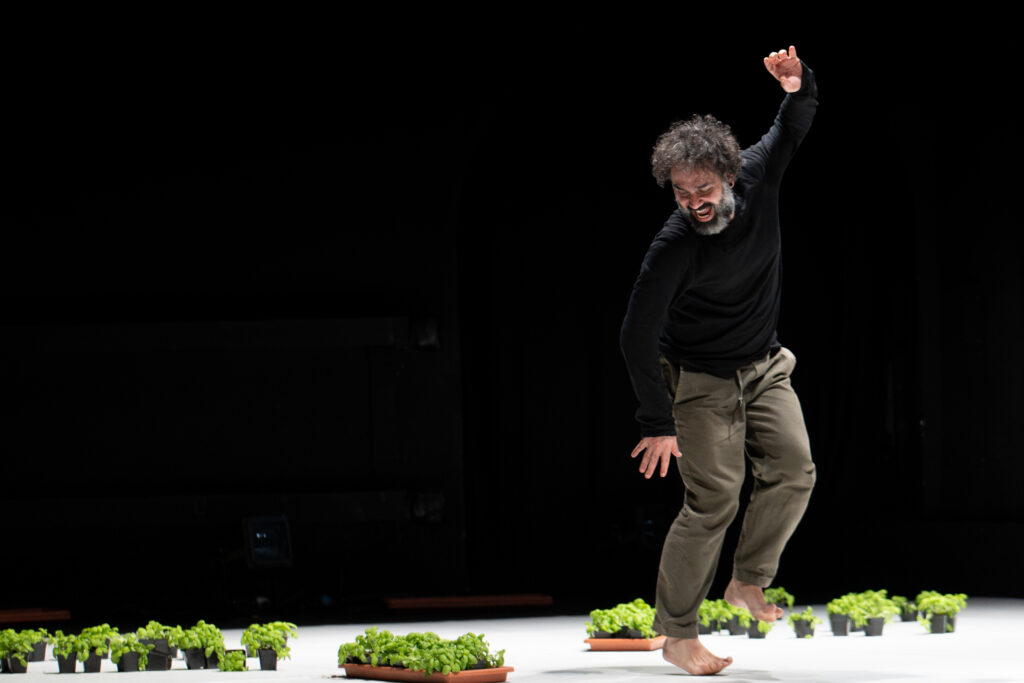
What inspired Dance is Not for Us?
I believe the work emerged from an accumulation of experiences and events over time. These circumstances made me question what we do, how we do it, and the cultural, social, and political dynamics and frameworks that shape our practices.
Looking at it from today’s perspective, I see the impulse behind the work also as a resistance to certain dynamics within culture that I feel work against creativity itself. Equally present is the need to confront the social and political assumptions we so often take for granted. Artists are frequently confined by fixed labels imposed by systems governed by political agendas. Such labels respond less to artistic and cultural needs than to systems of categorisation and control.
The work is also a process of remembering and of confronting, in the present, experiences of loss, pain, and erasure. It is about resisting the different forms of supremacy that determine whose bodies, histories, and artistic expressions are allowed to be visible. It asks who is allowed to dance, who has the authority or legitimacy to define what dance is, and why we still need to create such categorisations and hierarchies within culture today.
What does dance mean to you in the context of Lebanon today?
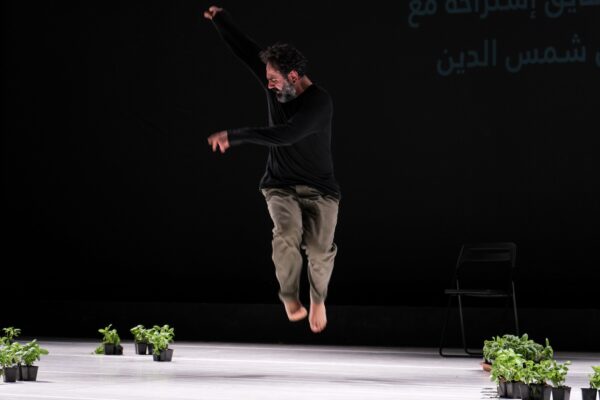
“Like the tree in my parents’ garden… always heading towards the light” is a sentence from the performance.
We do not have a choice but to continue doing what we do. Dance is needed more than ever. Not only dance, but all forms of culture and creativity. Dance, in particular, is a way of insisting on presence. In a reality where bodies, spaces, and histories are constantly threatened with disappearance, dancing becomes a way of reclaiming the right to be visible, to gather, and to imagine a future.
What is happening in the south of Lebanon is deeply painful. The elimination of all forms of life is a barbaric act. It is devastating to the point of making us lose
hope in the systems that govern our world today. This loss of hope is very dangerous.
I have always regarded dance as a “confirmation of presence”, an artistic form that touches on questions of being, and an immediate and living expression of the present. It confronts reality and pushes the boundaries of presence into places that we cannot always explain intellectually. For me, dance is not separate from the political and social conditions we live through. However, the strength of dance lies in its ability to create a space where we can confront what is happening without being completely defined by it. This is important and much needed today. We have to fight ignorance through awareness.
What does it mean to bring this work to London with Dance Umbrella?
I must admit that this invitation to perform at Dance Umbrella is a very special one for me.
Every performance is a new encounter, a new gathering, and a different experience. However, coming to London and performing at Dance Umbrella, particularly with this solo, brings back different sensations and memories from the time when I was studying in London. I saw many performances and followed the festival for many years, and I have always had a special connection to it and to its ability to create an important space for contemporary dance in London, bringing together artistic practices that emerge from different contexts and experiences.
I also believe that the festival’s current vision and direction open it to wider perspectives on dance, enriching the artistic scene while raising important questions about the act of curation and programming. Which realities and artistic practices are being made visible? And ultimately, where are we heading? These are essential questions that do not simply reflect the field but actively shape its future.
How does maqam influence your performance?
In Arabic music, a maqam is a melodic system defined by a particular arrangement of notes, intervals, and phrases. Each maqam creates its own atmosphere while allowing space for interpretation, variation, and improvisation.
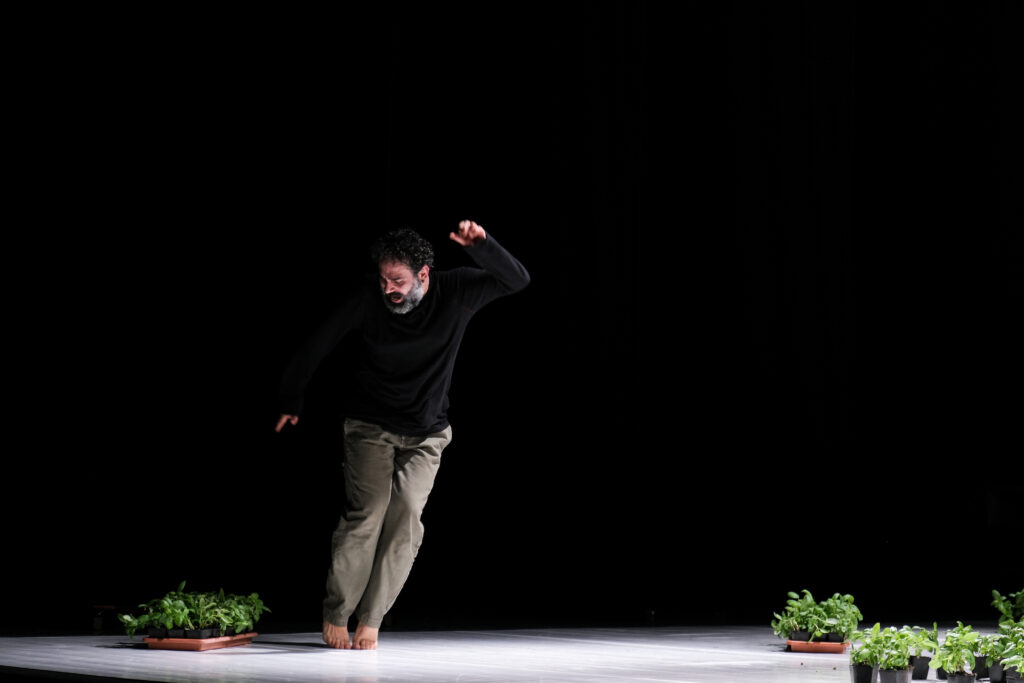
I use the word to describe my own movement research and practice. The Maqam practice is not based on a fixed form or movement vocabulary. It understands the body not as a single, fixed entity, but as a meeting place of different bodies, memories, sensations, and relationships.
From this perspective, dance is not simply a visual composition of bodies moving through space. Rather than organising movement around a centre of gravity, the practice works through shifting ‘centres of signification’ within the body. Dance becomes a dialogue within the body and between the body and its surroundings.
The Maqam practice is based on relationships and instant creation. It regards dance immediate, alive, and urgent.
What do you hope audiences take away from the work?
I like to think of the performance as an experience and a gathering that might open new perspectives and invite the audience to reflect on some of the urgencies of our present.
The show will be taking place at the Barbican’s Pit Theatre on 16 & 17 October 2026